
| Finish | |
|---|---|
| Manufacturer | |
| Model # | |
| Product Year | |
| Product Type | |
| Size | |
| Todays Comparable New Price |
$4,499.00
Shipping, Delivery & Setup costs are not
included in sale price. Please contact us
for shipping details and special pricing.
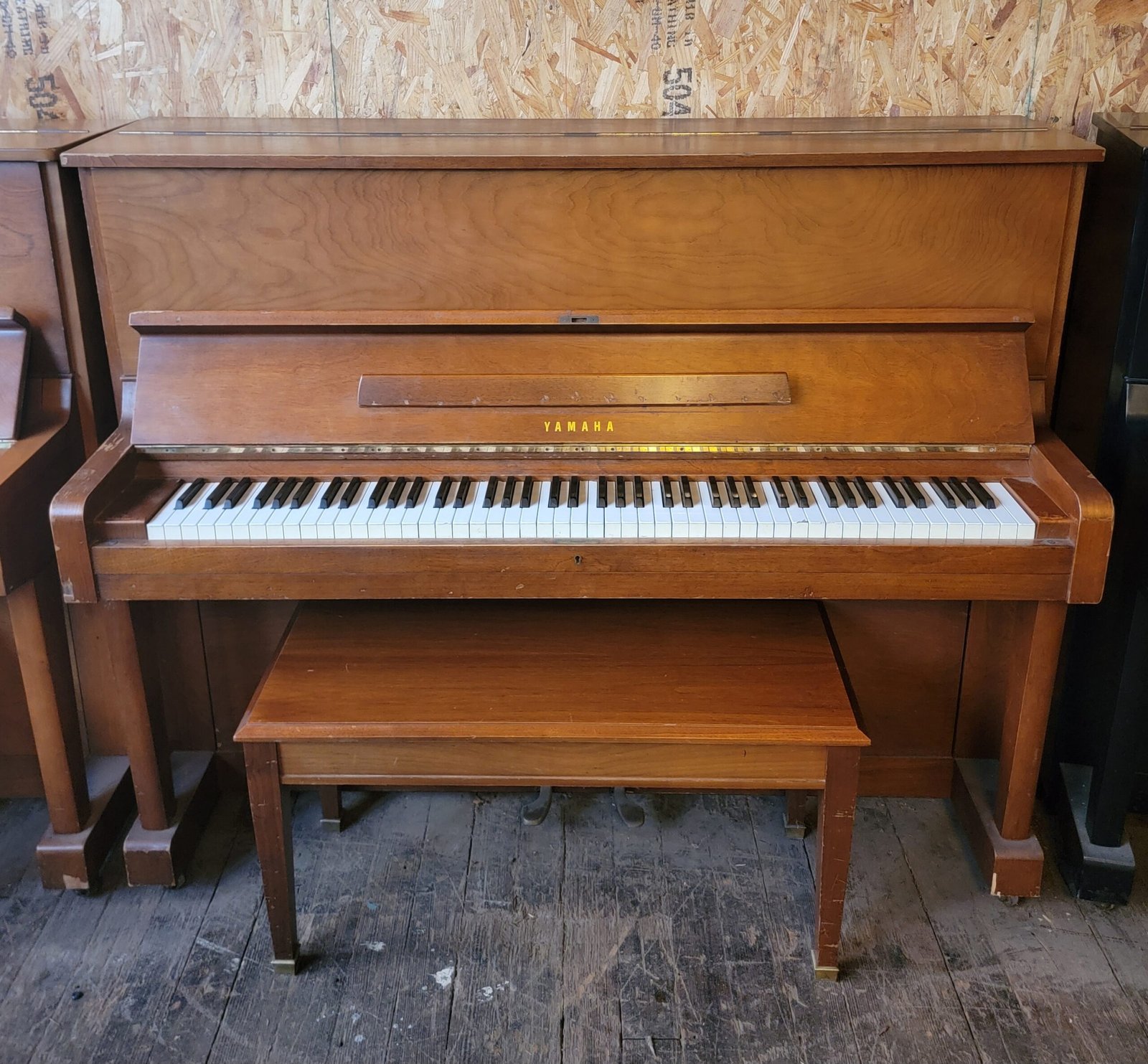
This 1967 Yamaha Model U1 represents the pinnacle of Japanese piano engineering from what technicians and players often call Yamaha’s “Golden Era.” Standing at a professional studio height of 48″, the U1 has been the industry standard for music conservatories, professional studios, and serious home pianists for over half a century. This particular instrument, finished in a rare and elegant satin light cherry, offers a warm aesthetic that matches its sophisticated musical character.
The 1960s “Golden Era” Quality: In the late 1960s, Yamaha was focused on establishing its reputation on the world stage, using high-quality materials that are often cost-prohibitive today. Pianos from this period are renowned for:
Tone and Performance: At 48 inches tall, the Model U1 features longer strings and a larger soundboard area than standard console pianos. This results in a deep, resonant bass and a sparkling, clear treble. The action is remarkably responsive, providing the quick repetition and tactile feedback necessary for advanced classical or jazz repertoire. Having been seasoned for decades, the tone of this 1967 model is more “mellow” and complex than the often-bright sound of a brand-new Yamaha.
Cabinet and Aesthetics: While most U1 models are found in polished ebony, this light cherry finish offers a refreshing, furniture-quality look. The satin sheen highlights the natural wood grain, making it a sophisticated addition to a home living room or a professional studio where a softer visual profile is desired.
Ideal For:
New Yamaha U1 (Current Production):
Value Analysis:
At $4,499, you are acquiring one of the most respected piano models in history at roughly 25% of the price of a new one, without sacrificing the professional performance standards that the U1 name represents.