
| Finish | |
|---|---|
| Manufacturer | |
| Product Type | |
| Product Year | |
| Size | |
| Todays Comparable New Price | New Entry-Level Upright: Typically retails between $4,500 and $6,000. |
$499.00
Shipping, Delivery & Setup costs are not
included in sale price. Please contact us
for shipping details and special pricing.
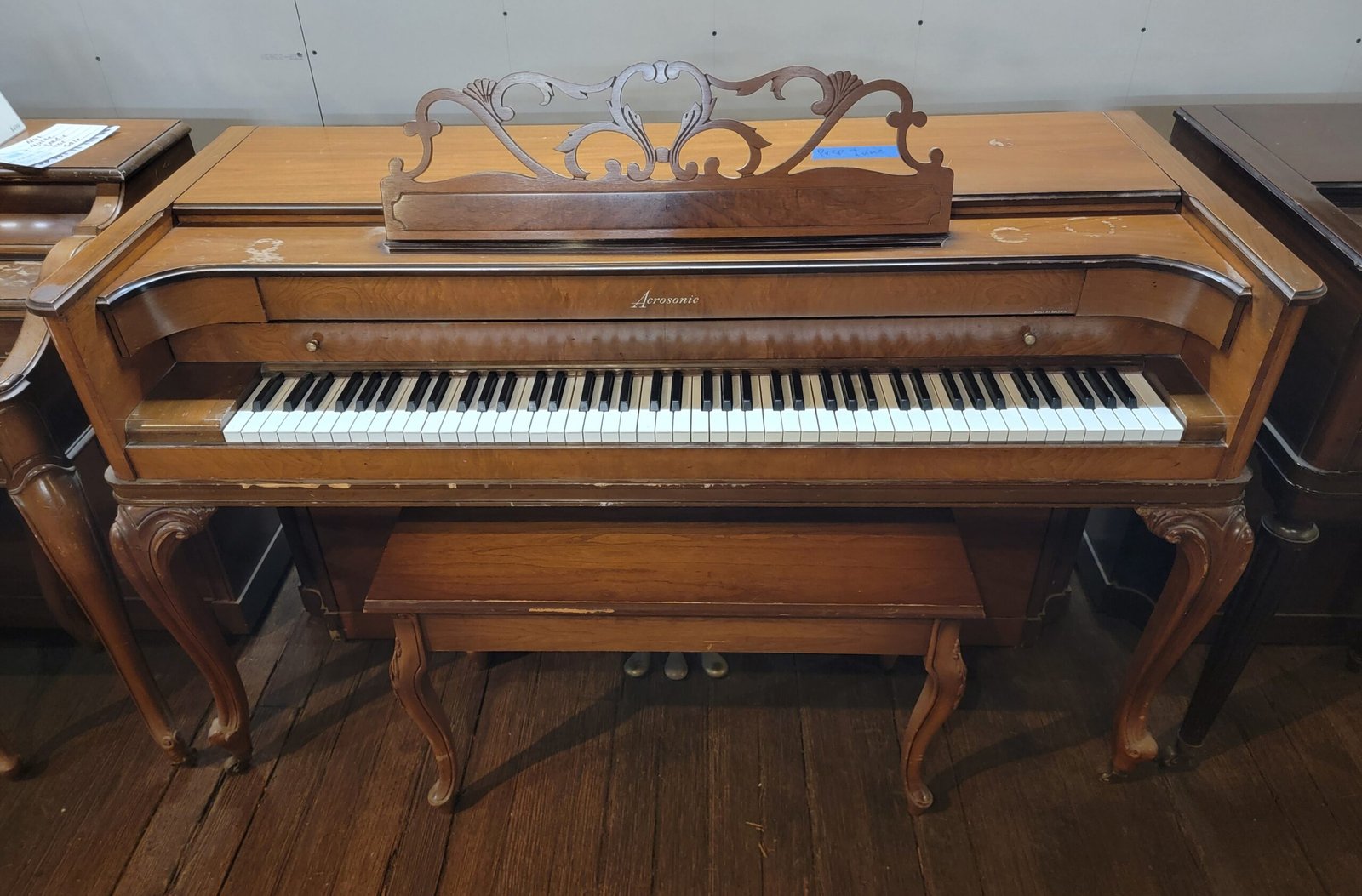
The Baldwin Acrosonic is widely regarded by piano technicians and teachers as the finest spinet piano ever manufactured. This 1950 model, standing at 37 inches, comes from the “Golden Age” of Baldwin’s American production in Cincinnati, Ohio. While spinets are generally known for their small size, the Acrosonic was engineered with a unique scale design that allows it to produce a much larger, warmer sound than its competitors.
The Acrosonic Legacy: The name “Acrosonic” is derived from the Greek words for “supreme tone,” and Baldwin spent years perfecting the bridge and soundboard design to overcome the physical limitations of a small cabinet. This 1950 model features a solid spruce soundboard and the legendary Baldwin “Full Blow” action, which provides a more responsive and tactile feel than the “drop actions” found in other spinets of the era.
Mid-Century Aesthetic: Finished in a warm satin walnut, this piano is a beautiful example of mid-century American furniture design. Its compact 37″ height makes it an ideal solution for apartments, small living rooms, or any space where a full-sized upright might feel overwhelming. The clean lines and natural wood grain allow it to blend seamlessly with both vintage and contemporary decor.
Tone and Playability: For its size, this Acrosonic offers a remarkably clear treble and a punchy, defined bass. It is an excellent “starter” piano for a young student, providing a real acoustic touch and sound that digital keyboards simply cannot replicate. Because it was built with high-quality American materials, it has maintained its tuning stability and structural integrity for over seven decades.
Ideal For:
The Modern Equivalent: True 37-inch “spinet” pianos are no longer manufactured today, as modern factories have shifted toward larger “console” or “studio” uprights. The closest modern equivalent would be a small entry-level upright, such as a Yamaha b1 or a Kawai K-15.
Price Comparison:
Why Choose the Acrosonic? While a new piano offers a factory warranty, the 1950 Acrosonic provides a level of “old-world” American craftsmanship—including solid woods rather than high-density fiberboard—that is rarely found in modern budget instruments. At $499, this piano costs less than many high-end digital keyboards but provides a genuine mechanical action and a real vibrating soundboard, making it a far superior tool for learning the nuances of piano playing.