
| Finish | |
|---|---|
| Manufacturer | |
| Model # | |
| Product Type | |
| Product Year | |
| Size | |
| Todays Comparable New Price |
$3,799.00
Shipping, Delivery & Setup costs are not
included in sale price. Please contact us
for shipping details and special pricing.
Sold
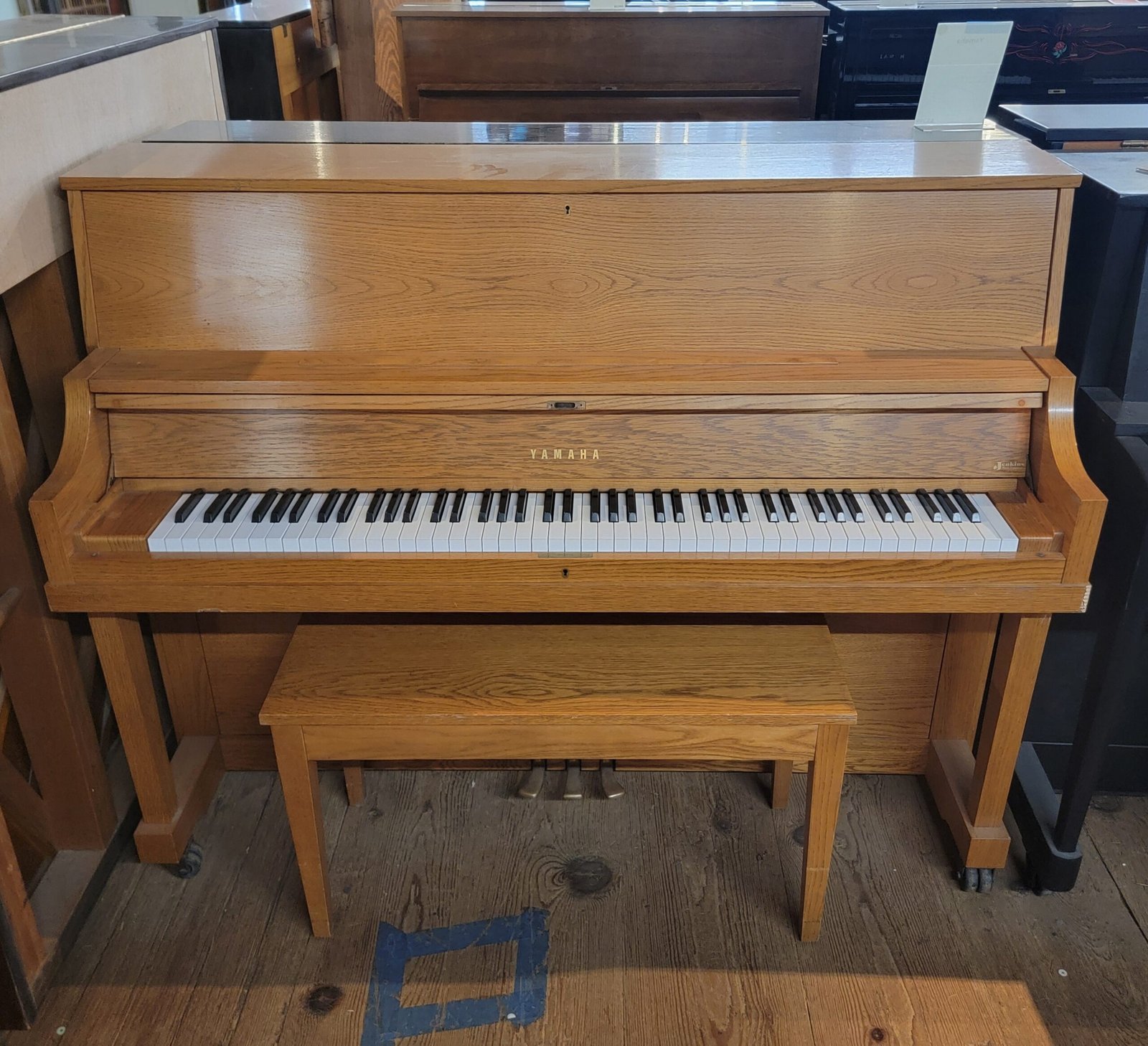
This 1996 Yamaha P22 studio piano offers dependable Japanese engineering in a classic vertical format. At 45″ tall, the P22 provides the performance advantages of a studio upright in a footprint suitable for homes, studios, practice rooms, and institutions. At $3,799, this represents accessible entry into piano ownership with a respected, reliable brand.
Yamaha Quality & Heritage: Yamaha Corporation, founded in 1887, is one of the world’s largest and most respected musical instrument manufacturers. Yamaha pianos are known for consistent build quality, reliable performance, and excellent value. The P22, produced from the 1980s through early 2000s, was Yamaha’s workhorse studio piano—a practical instrument designed for durability and dependable sound.
Model P22 Specifications: The 45″ studio height provides significant advantages over smaller console or spinet pianos:
Tone & Performance: This Yamaha delivers a balanced, pleasant tone characteristic of the P22 line. While not as rich or nuanced as premium brands like Steinway or Mason & Hamlin, the P22 offers solid, consistent sound suitable for:
The touch is responsive and the action is reliable, making this an appropriate instrument for developing proper technique without the premium investment of higher-end brands.
Cabinet & Finish: The satin golden oak finish provides warm, natural aesthetics that complement traditional and transitional décor. Golden oak was a popular choice during the 1990s and adds classic character to the instrument. The finish shows appropriate wear consistent with a 28-year-old piano but remains attractive and serviceable.
Condition & Age: At 28 years old, this P22 demonstrates solid Japanese engineering and durability. Yamaha pianos from this era are known for longevity and relatively low maintenance requirements. While showing cosmetic signs of age, the instrument remains fully functional and playable.
Practical Advantages:
Ideal For:
Investment Perspective: At $3,799, this Yamaha P22 represents modest financial commitment with minimal depreciation risk. While not an appreciating asset like vintage Steinways or Masons & Hamlins, Yamaha pianos hold their value reasonably well in the used market, making this a relatively safe investment.
What to Expect: This is a straightforward, honest piano—no exotic tonal qualities or collector’s appeal, but rather a dependable instrument that does what it’s designed to do: provide reliable, consistent piano performance at an accessible price. It’s the kind of instrument that quietly serves students, teachers, and families without fanfare or drama.
The Bottom Line: At $3,799, this 1996 Yamaha P22 offers practical piano ownership with a trusted brand name and proven reliability. While it won’t capture the romance or investment potential of vintage American grands, it delivers genuine musicality, solid construction, and dependable performance—exactly what most piano players actually need.
Ideal for anyone seeking a functional, affordable, reliable studio piano without pretense—
Long-Term Cost Analysis:
If you buy the new P121 at $9,000 and it depreciates to $3,500 in 10 years, your true cost is $5,500 plus maintenance and potential repairs on aging parts.
If you buy the used P22 at $3,799 and it holds value at $3,200, your cost is only $599—a fraction of the new piano’s depreciation loss.
New Yamaha P121: $8,900 – $11,500 Used Yamaha P22 (1996): $3,799
This represents 60-65% in savings while getting a proven, reliable Yamaha instrument that has already demonstrated its longevity and durability over nearly three decades.
Sold